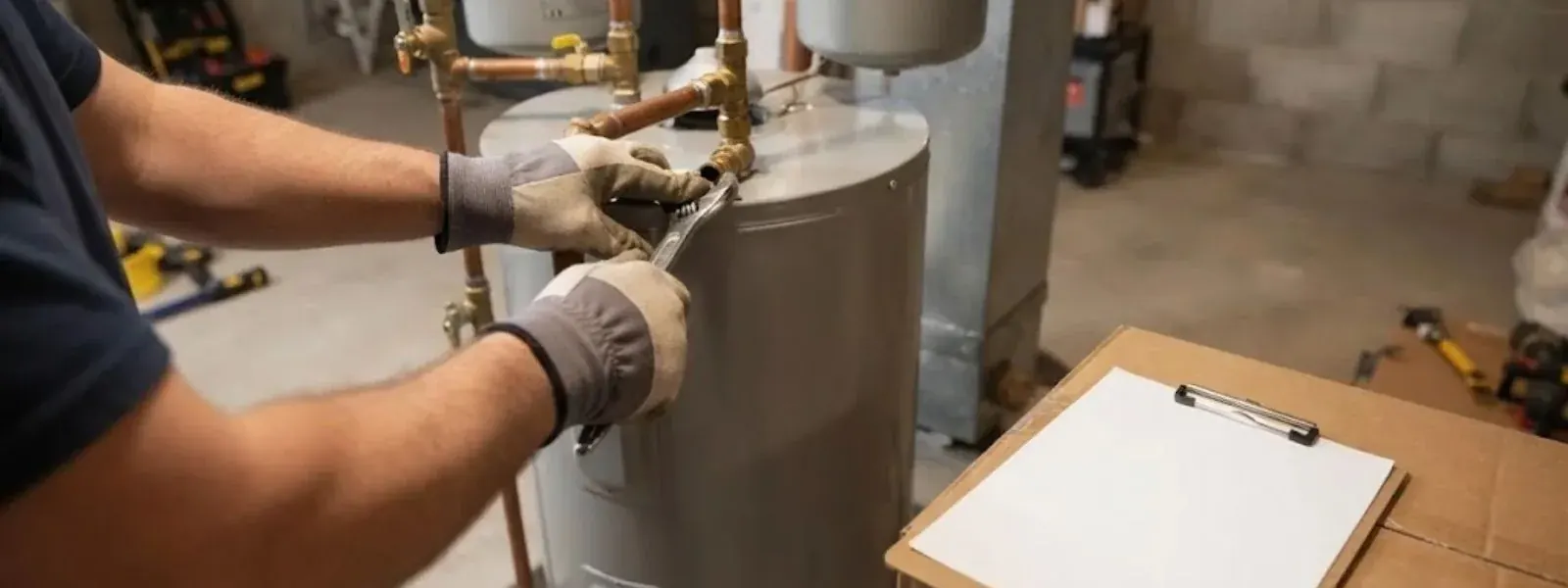
A new water heater is one of the few plumbing jobs you can plan. Water heater installation in Elmwood Park covers a new tank in a renovated basement, a move to a different fuel, a relocation to a utility room, or putting one in a building that had none. The work is the same: size it, vent it, connect it and test it.
Nothing is failing at the moment, so there is time to make good choices. If something already is, our replacement service covers the urgent version. Pick a size, a fuel and a location, then we handle the connections, the code details and the paperwork.
Four decisions to make before the installer arrives
A short list of choices, made in advance, saves the most time on the day.
Where it will sit
A spot with clear access, a nearby drain, and room for a vent or condensate line. Closets and finished rooms need extra thought.
Which fuel
Natural gas, electric, or a hybrid heat pump. Your existing service decides what is easy and what is a bigger project.
How much hot water you use
Number of bathrooms, tubs, laundry and dishwasher habits. This sets tank size or the flow rate a tankless unit must meet.
When you are home
Plan on part of a day without hot water and clear a path from the door to the install spot.
How tank size is chosen, in plain terms
Sizing is not guesswork. A household with two adults and one bathroom has very different peak demand from a two-flat with four people and a washer running in the morning. The first-hour rating on the unit's label tells you how much hot water it can deliver in the busiest hour.
We ask about your showers, tubs and appliances, then match a tank to the real peak. Oversized units waste fuel keeping extra water hot, and undersized ones run out when you most need them.
Gas, electric, hybrid: what each fuel needs from your house
| Fuel | Needs | Watch for |
|---|---|---|
| Natural gas | Gas line of the right size, a vent to the outside, air for combustion | Old flues that do not suit a newer unit |
| Electric | A dedicated circuit from a licensed electrician and a panel with room | Older panels with no spare capacity |
| Hybrid heat pump | Space, airflow, a condensate drain and a circuit | Tight closets and cold, damp basements |
| Propane or other | Special fittings and a different gas orifice | Ask us first, this is a different job |
Ready to plan the install?
Call and a plumber will go over fuel, location and what to have ready.
The parts of a proper install that you cannot see once it is finished
These pieces do not get photographed, but they protect your floors and your family.
Installed with every tank
- Drain pan. A pan with a drain line catches small leaks before they reach finished flooring. Code and permit rules vary, so we confirm what applies to your home.
- T&P discharge line. A relief valve with a pipe that ends where hot water can escape safely.
- Shutoff valve and unions. A full-port shutoff and unions make later service far easier.
- Expansion tank. Closed systems need a way to absorb thermal expansion, and a small tank on the cold line does it.
- Seismic or tie-down supports. Only where the layout calls for it. We check what your space needs.
Moving a heater or changing its vent: where installs get complicated
A like-for-like swap is simple. A relocation or a vent change is design work.
Relocating the tank
New supply and return lines, a new gas run or electrical circuit, and a drain or pan at the new spot.
Venting through a side wall
Some units can vent through an exterior wall instead of a chimney, which changes the pipe and the clearances.
Chimney liners
A bigger chimney flue can cool exhaust too quickly on a newer unit. We check before reusing one.
Basement finishing
If you are building out a basement, plan the heater's location before the framing goes up.
Permits and code: ask the Village before you schedule
The Village of Elmwood Park follows the Illinois State Plumbing Code, and its plumbing permit application lists water heaters. Permit rules vary by job, so ask the Village building department what yours needs.
Plumbers working in the Village must file a State licence, liability insurance and a bond. Inspections need two working days of notice, so schedule your install with that in mind. See our full list of plumbing services if the project includes other work.
What the price depends on
A quote comes after we know the unit, the location and the connections, and you see it before any work starts. We do not give numbers sight unseen.
Expect it to reflect the tank and its efficiency, any gas or electrical changes, vent work, the pan and expansion tank, haul-away of an old unit and permit costs. If you are also thinking about on-demand heat, read about tankless water heaters first.
Installation questions before you book
The price we give you before work starts spells out what is included. Vent work and gas line changes depend on the home, so we look first. Permit rules vary, and we tell you what the Village requires.
Often yes. Some units can vent through a side wall instead of a chimney. It changes the materials and clearances, so we assess the space before promising anything.
Yes, as planned installs. Heat pump units need space and a condensate drain. Tankless units need adequate gas supply and venting, or a strong electrical service. We explain the demands in advance.
Many homes with a check valve or pressure reducing valve on the incoming line need one. We look at your setup and tell you.
Code requirements vary by situation, so we do not guess. A pan is smart anywhere a leak could damage finished space, and we can quote it with the tank.
Most tank installs take part of a working day. Relocations, new gas lines or electrical upgrades take longer, and we outline that before we begin.
Clear access to the work area, a path from the door, someone home to approve changes, and any manuals if you bought the unit yourself.
Standards and sources: Work in Illinois follows the Illinois Plumbing Code (77 Ill. Adm. Code 890), and the Village of Elmwood Park building department applies those minimum standards locally. Gas smell guidance comes from Nicor Gas: leave the building, then call the gas utility and 911 from outside.