Sewage in the tub, toilets that gurgle, water creeping out along basement baseboards: the main line is not carrying waste out of the house. Our 24/7 line takes these calls at any hour. Stop all water use, do not flush, and keep everyone out of the wet area, especially near outlets and appliances.
Sewer line cleaning is the clearing of the main drain that carries every fixture's waste from your house to the street sewer, usually through a cleanout with a heavy cable and a camera. In Elmwood Park the line is often older clay or cast iron, which makes roots and buildup common causes.
Sewage backing up right now: the first moves
Most of the damage in a backup comes from more water being added. These steps limit it while you wait for us.
Do this, in this order
- Stop every drop of water. No flushing, laundry, dishwasher or showers. A full main line has nowhere to send it.
- Stay out of the standing water. Sewage carries bacteria. If water is near outlets, a panel or plugged-in appliances, stay back and tell us on the phone.
- Leave the cleanout cap alone. If the line is full, opening it can release a rush of backed-up sewage onto the floor.
- Move belongings up. Lift rugs, boxes and electronics off a basement floor if you can do it safely.
- Take photos, then call your insurer. Ask whether your policy covers sewer backup, because many do not unless it was added.
Main line or branch line: reading the pattern
Branch line clog
- One fixture or one bathroom is affected
- Other drains in the house run normally
- A cable at that fixture usually settles it
Main line clog
- Several fixtures slow or back up together
- The lowest drain in the house gurgles or rises first
- Flushing or running the washer makes another drain bubble
A good rule: the lowest opening in the house tells the story. A basement floor drain or a ground-floor tub that fills when an upstairs fixture runs is a strong sign that the line below has closed. For a single stubborn fixture, see drain cleaning.
Where the cleanout is, and why it matters
A cleanout is a capped pipe that gives a plumber a straight way into the main line without pulling a toilet. Locating it saves time on a night call, so it is worth finding before you need it.
Common places to look:
- In the basement floor or low on a wall, near where the main leaves the house
- In a crawlspace or utility room close to the foundation
- Outside, in a front or side yard, in a small capped pipe at ground level
If you cannot find one, say so when you call. We can often work through a toilet or a floor drain, though a house with no cleanout may benefit from having one added.
Sewage coming up and need a plumber?
Call the 24/7 line, tell us which drains are affected, and we will say whether a same-day appointment is open.
What our plumber does at the cleanout
Read the symptoms
We ask which fixtures backed up and in what order, then open the cleanout slowly with protection laid down.
Cable the line
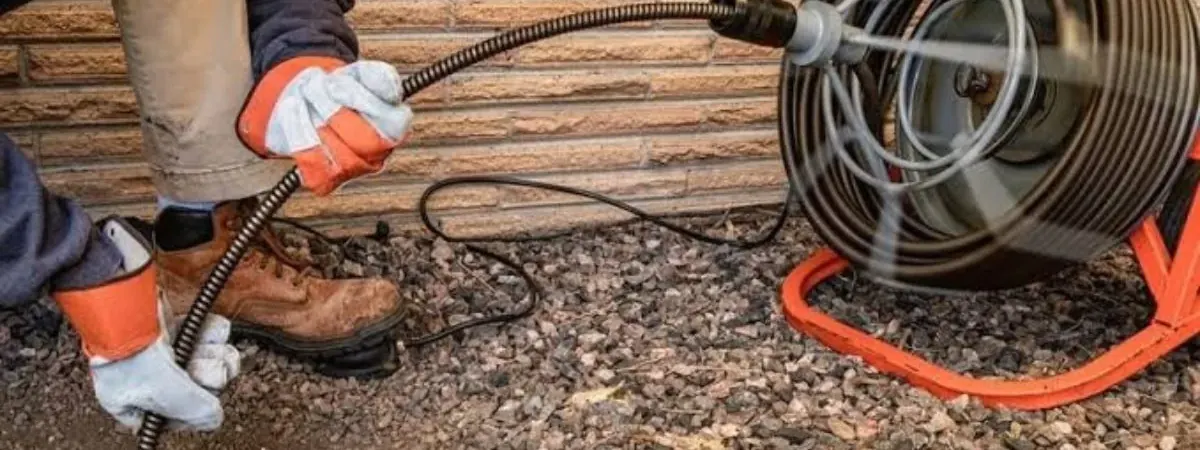
A heavy drain machine with a cutting head goes through the cleanout toward the street, cutting roots and breaking the blockage.
Camera the result
A sewer camera confirms the line is open and shows whether roots, a sag or damage caused the stoppage.
Explain what we found
You hear what came out, where the problem sat and whether it is likely to return. Cleaning is not the same as repair.
Combined sewers in Elmwood Park: whose pipe is it?
The Village is served by combined sewers, which means rain and household waste share one pipe, owned and maintained by the Village. That shapes how a backup should be read.
Your side of the line
A clog between your house and the point where your line meets the street sewer is generally the owner's pipe, though you should check with the Village. This is what we clear.
The street sewer
The large pipe under the street belongs to the Village. If our camera shows your line is clear and the water is still coming up, we say so, and you can report it.
Heavy rain surcharge
In a downpour, the combined sewer can fill and push water back into basements. That can happen with a perfectly clear home line, and a cable will not stop it.
The long-term fix
A backwater valve or an overhead sewer is how a house protects itself from rain surcharge. The Village has offered a flood-proofing assistance program, so ask the building department if it is open. For related pump work, see sump pump service.
Why main lines clog again: roots, grease and the pipe itself
A main line that opens and then closes again has a reason. Roots enter old clay and iron joints, grease builds where lines run cool, and flushed wipes snag on anything rough. A line that sags will hold paper and catch it again.
A camera pass tells us which one we are dealing with. Where buildup is the cause, hydro jetting cleans the wall more fully than a cable. Where the pipe is breaking, cleaning only buys time, and sewer line repair is the real answer.
What decides the price of clearing a main line
You get a clear price before work starts. The things that move it are the access, since a cleanout is easier than a toilet pull, the length and depth of the line, how severe the blockage is and whether we need a camera and a second pass. A backup in the middle of the night is a call for speed, and we will explain the price before anything begins.
Main line backup questions answered
Yes, a sewage backup is exactly what the late-night line exists for. Describe what is happening and a plumber will tell you what is open, including any same-day appointment, and what to do with the water and the floor until we can get there. Arrival times are never promised on the phone.
The camera is the surest way. If our plumber clears and cameras your line and it runs clear while the water still rises, especially in heavy rain, the issue may be on the street side, and you can report it to the Village.
Usually a cable first to restore flow, then a camera to see the result. A jet may follow if buildup is the cause, and the plumber explains the choice before work starts.
That depends on your policy. Many homeowner policies exclude it unless a sewer backup endorsement was added, so call your insurer and take photos before cleanup.
Keep wipes, grease and anything but toilet paper out of the drains, and disconnect downspouts from the sewer if your setup allows. Roots or a sagging pipe need a camera and sometimes repair.
Often, yes. We can sometimes go in through a toilet, a floor drain or an access point, though a missing cleanout is worth correcting once the emergency is over.
It depends on access, line length, blockage and whether a camera pass is needed. We give you a clear price before work starts, and we do not quote numbers on a web page.
Standards and sources: Work in Illinois follows the Illinois Plumbing Code (77 Ill. Adm. Code 890), and the Village of Elmwood Park building department applies those minimum standards locally. Backup and flood guidance comes from the Metropolitan Water Reclamation District flood resource guide, which advises keeping only waste and toilet paper going down the toilet.