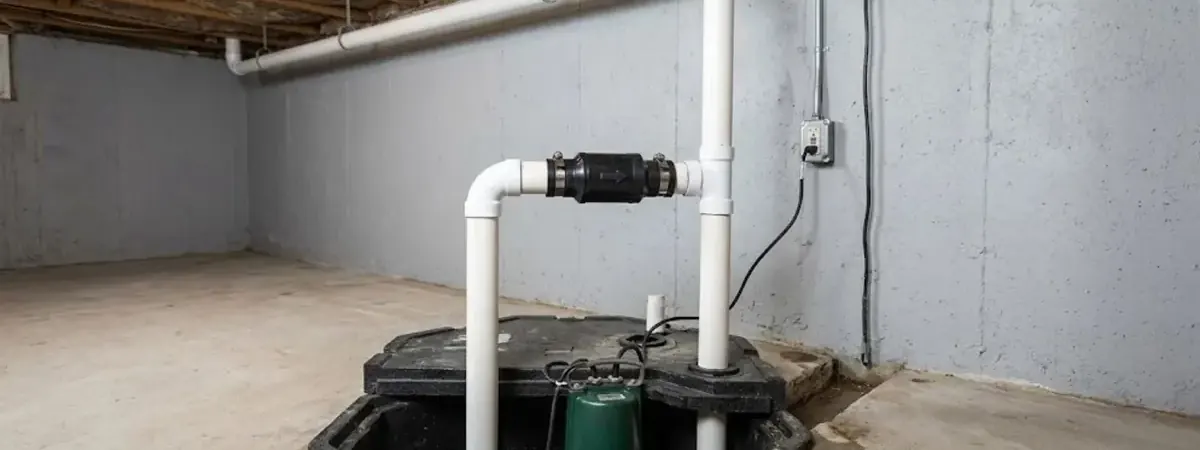
A sump pump that has quit in the middle of a storm is an emergency, and our plumbers answer the 24/7 line for exactly that call. While you wait, stay out of any basement where water is near outlets, the panel or a plugged-in appliance. Do not wade in to reach a breaker. Lift valuables off the floor and tell us what the pit is doing.
Sump pump repair and installation covers the pit, the pump, the float switch, the check valve and the discharge pipe that carries water outside. In Elmwood Park, where heavy rain can overwhelm the combined sewers, that small pit is one of the few defenses a basement has, so the backup plan deserves as much thought as the pump.
Water rising in the pit right now: what to do first
Stop at any step where you would have to stand in water to continue.
The next ten minutes
- Look at the outlet, not the pump. If the outlet and the floor around it are dry, check whether a GFCI has tripped or a breaker has switched off. If water touches the outlet, leave it and call us.
- Leave the float alone unless it is safe. A float jammed against the pit wall is a common reason a healthy pump stays silent. Unplug the pump before you touch anything near the pit, and never reach into water with the cord live.
- Send less water down the house drains. Hold the laundry, the dishwasher and long showers until the pit calms down. When the sewer is running full, every extra gallon makes the day worse.
- Call the 24/7 line. Tell us the pump's age, whether it hums, runs without emptying the pit, or does nothing, and whether a backup was ever installed. That tells us which pump and parts to bring.
Why pumps quit in the same storms that need them most
Pumps sit idle for weeks, then run hard in the worst weather. Most failures trace to a short list of causes.
- A float switch that snags on the pit wall or the discharge pipe, so the pump never gets its signal to start.
- A failed check valve, which lets pumped water fall back into the pit so the motor cycles without making progress.
- An intake screen or impeller packed with grit and debris.
- A tripped GFCI or a power outage, which silences a perfectly good pump.
- A worn-out pump, or one too small for the water the soil now sends.
- A blocked or frozen discharge line outside, leaving the water nowhere to go.
A pump that runs endlessly without lowering the water points toward the check valve, the discharge or a pump out of its depth. One that never starts points toward power or the switch.
Backup power and backup pumps compared
A pit with one pump and one power source has two single points of failure. Here is how the common backups differ.
| Option | How it works | Where it falls short |
|---|---|---|
| Battery backup pump | A second pump with its own battery starts when the main pump fails or the power drops. | Runs for a limited time in a long outage and needs testing and eventual battery replacement. |
| Water-powered backup | Household water pressure drives a jet that pushes pit water out, no electricity needed. | Needs good water pressure, uses a lot of water while running and sends it to a drain, so local rules matter. |
| Generator | Keeps the main pump and other circuits alive. | Someone must start it, and it must never run indoors or in a garage. |
Pump down and the pit filling?
Our plumbers take the call on the 24/7 line and can book a same-day appointment when one is open.
How a pump replacement or new installation goes
Read the whole system
We look at the pit size and condition, the cord and outlet, the float, the check valve and where the discharge pipe ends outside.
Match the pump to the pit
Pit depth, how quickly water arrives and how high the pump must lift decide between a submersible and a pedestal style.
Rebuild the discharge
A new check valve goes on the discharge pipe, with a small relief hole where the design calls for it, and the outlet is aimed away from the foundation.
Test with real water
We fill the pit, watch the float rise and the pump empty it, and confirm the valve holds so nothing drops back down.
Backwater valves and overhead sewers: flood control for a combined-sewer village
Here, rain and household waste travel together. The Village owns combined sewers, and in a downpour that shared pipe can run full and shove water back toward basements. A sump pump deals with groundwater around the foundation and cannot stop a surcharged sewer, so the two problems call for different tools.
A backwater valve sits on the building drain and shuts when flow reverses. An overhead sewer sends basement waste to a sealed pit and pump that lifts it above the floor, so the sewer must rise much higher before it reaches a fixture. A damaged building drain is another matter, covered under sewer line repair.
The Village building department has offered a cost-sharing program for flood-proofing work: overhead sewers, backflow valves paired with a bypass pump, lift stations, and new drain tile leading to a sump. Its plumbing permit form lists similar items. Whether the program is open right now is a question for that office, which can also say if an inspector will look over your setup. Permit rules vary by job.
The record explains the interest. Flooding disasters were declared for the area in 2007, 2008 and 2011, and in July 2011 rain of 2 to 4 inches an hour left several feet of water on Oak Leaf Avenue. A project to reduce sewer backups finished in 2015. We never promise that a valve or pump prevents flooding. They lower the risk when someone tests them.
Sump pit or sewage ejector pit?
A sump pit collects groundwater from drain tile around the foundation. A sewage ejector pit, found where a basement bathroom sits below the sewer line, collects waste and has a sealed, vented lid. They look alike, but the pump, lid and safety rules differ, so tell us which you have.
Call tonight, or book a daytime visit
Call tonight
- Water is rising in the pit and the pump is silent or not keeping up.
- Water stands near the electrical panel, a furnace or an outlet.
- The storm is still going and more rain is forecast.
Can wait for daytime
- The pump runs normally but you want a battery or water-powered backup before the next storm.
- The pump is old and noisy, but the pit is dry.
- You want to ask about a backwater valve or the Village program.
Unsure which column fits? Call and describe what you hear. For seepage that a pump alone will not solve, read about basement water control and what plumbing can and cannot do.
What moves the price of a sump job
The price follows the pump type and size, the condition of the pit, the length of the discharge run and whether the outlet needs a licensed electrician. You get a clear price before work starts.
Sump pump questions from Elmwood Park basements
Storms rarely wait for business hours, and neither does the line. Ask us on the call whether a same-day slot is open, and we will talk you through the pit while you wait. No arrival time is promised.
A humming pump that moves nothing often has a jammed impeller, a clogged intake or a failed check valve. Unplug it before you look. It may also be undersized for the inflow, which a replacement can solve.
Many pumps wear out within about a decade, sooner if the pit fills often. A pump that sits unused can seize, so lifting the float and watching it run a few times a year catches trouble early.
No plumber can promise that. A working pump with a backup lowers the risk of groundwater flooding, but a surcharged combined sewer or a street flood is a separate cause that a sump pump does not touch, such as a blocked sewer line.
They answer different problems. A backup pump covers groundwater and a failed main pump. A backwater valve helps when sewer water tries to reverse into the house.
Possibly. The Village has put out an assistance form for flood-proofing work, and only the building department can say whether the program is open at the moment. Ask them before you buy anything, since permit rules vary by job.
Standards and sources: Work in Illinois follows the Illinois Plumbing Code (77 Ill. Adm. Code 890), and the Village of Elmwood Park building department applies those minimum standards locally. Flood guidance comes from the Metropolitan Water Reclamation District and the Village of Elmwood Park flood-proofing pages.