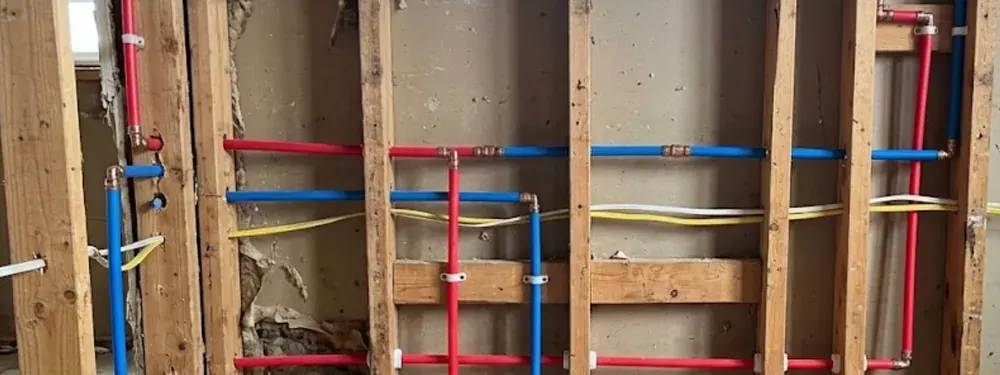
At some point, repairing the same house piping again stops making sense. Whole-house repiping in Elmwood Park, IL, means replacing the water supply lines throughout the home with new pipe, so the old, failing material is gone instead of patched one leak at a time.
It is a bigger decision than a repair, and it should be made with facts. The median home here was built in 1955 and about 77 percent went up before 1970, so original galvanized, old copper and early plastic lines are common to find. This page explains how we judge, what changes in your house and what shapes the price.
Keep patching or replace everything: how to decide
Patching still makes sense when
- One leak has appeared in pipe that is otherwise sound.
- The walls of the pipe look thick and clean when we open it.
- Water pressure and color have stayed normal.
- The house will be sold soon and the pipe is not a problem.
Repiping starts to make sense when
- Leaks keep appearing in different places.
- Pressure has dropped and water runs brown when it has sat.
- A plumber cuts into the pipe and finds a crusted, narrowed interior.
- The pipe is a material with a known history of failing.
A repair-only quote can look cheaper, but a string of repairs adds up in drywall and in lost days. Our plumbers will show you the cut section of pipe so you can judge.
How old supply pipe shows its age
Different materials fail in different ways. Here are the ones we see in older housing.
Galvanized steel
Zinc-coated steel corrodes from the inside, so pressure fades and water can turn rusty before the pipe leaks outright.
Old copper
Pinhole leaks, green crust at joints and repeated repairs on the same line suggest the pipe walls are thinning.
Polybutylene
Gray or blue plastic supply pipe was installed in some homes decades ago and is known to crack at fittings.
Lead solder
Older copper systems may have lead in the solder at the joints. The federal rule banning it dates to the mid-1980s, so we say older, not exact.
Brittle CPVC
Plastic that has become stiff with age can crack when moved or when pressure surges.
PEX or copper: honest trade-offs
Both are good materials. The better choice depends on the house and on what you value.
| Point | PEX | Copper |
|---|---|---|
| Routing through walls | Flexible, so it snakes through framing with fewer openings | Rigid, so it needs straighter paths and more joints |
| Fittings and joints | Fewer, because long runs bend around corners | More, soldered or pressed at every turn |
| Cold weather | Tolerates some freezing better, but is not immune | Can split when frozen |
| Track record | A shorter history, now widely used | A very long history in homes |
| Exposure | Must be kept out of sunlight and certain chemicals | Resists heat and sunlight, can corrode in some water |
We confirm with the Village and the Illinois Plumbing Code which materials are accepted for your job before we choose.
A repipe day when you are living in the house
A repipe is disruptive but organized. Here is the rhythm of a typical job. Timing depends on the size of the home.
Before the crew arrives
Clear access to the main shut-off, the water heater and the walls where pipe will run. Move art and fragile items away from work areas.
Morning: water off
The main is closed, and the old lines are drained. We open small access points and start running new pipe.
Evening: water back where possible
Where it can be done, we restore water at the end of the day so you can cook and wash, and we often work by zones to keep part of the house available.
Final days: tests and closing up
Pressure testing, the Village inspection if one applies and a flush of every line come before access holes are patched.
Weighing a repipe against one more repair?
Call our licensed plumbers. We will look at the pipe, explain what we see and give you a clear price before work starts.
Drywall access: where the holes go and what happens after
Wherever there is an accessible basement ceiling, attic or crawl space, we route the main runs there, which keeps wall openings to a minimum. A leak sometimes pushes us to run new lines overhead instead of under a slab, which can mean fewer concrete cuts.
Fixtures still need a drop to each supply, which means small access cuts near sinks, tubs and toilets. We cut them neatly so they can be patched.
Where we can, we close the openings so they are ready for finishing. Texture, paint and tile belong to a painter or tiler, so plan to book them once the plumbing passes its tests.
Phased repipes: one branch or one floor at a time
A repipe does not always have to happen at once. If the budget or the schedule cannot take the whole house, we can split it by priority:
- Start with the lines that have already leaked or are in the most damaged area.
- Do the hot water side first if it is failing faster, since heat often ages pipe sooner.
- Replace one floor, then the next, leaving the least urgent lines for later.
- Plan a final tie-in so old and new lines are connected safely, with the right transition fittings.
A phased job can cost more in total labor than doing everything at once, but it spreads out the work and the disruption. We explain both ways before you choose.
Permits and inspections
Whether your repipe needs a permit depends on the scope, and the Village building department is the office to ask. Where one applies, it is paid before work begins, and the Village wants two working days notice for an inspection. Before hiring for something this big, look up the contractor in the state's public plumbing licence verification tool.
What shapes the price of a repipe
We do not quote prices on a web page, because every house is different. The main drivers are the size of the home, the number of fixtures, whether the lines run through walls, floors or open basement ceilings, and the material you choose. How much drywall must be opened and repaired also counts, as do permits and inspections and whether the water service line outside also needs replacing, covered under water line repair.
If a leak has already opened a wall, tell us. See also burst pipe repair for the emergency side of failing pipe.
Repiping questions from Elmwood Park homeowners
Many homes take a few days, and larger or multi-unit buildings take longer. We give a schedule at the visit, because access, house size and the number of fixtures change it.
Usually yes. Water is off for part of each working day, and we plan around kitchens and bathrooms where we can. Tell us if someone relies on medical equipment or works from home.
Often, yes, where there is an attic or a ceiling space that can carry the lines. It avoids cutting concrete, but it depends on the layout of your house.
Both work. PEX bends through walls with fewer cuts, and copper has a long track record. We explain the trade-offs on your house and confirm what the Village accepts.
Older homes may. Federal rules banned lead solder in the mid-1980s, so a copper system from before that time deserves a look. We can describe what we see, and a water test answers the question.
Not always right away, but it is known to fail at fittings, so many owners replace it before it leaks. We inspect it and tell you what shape it is in.
This page covers water supply lines. Drains and sewers are a separate decision, starting with a camera look. See sewer line repair for that side.
Standards and sources: Work in Illinois follows the Illinois Plumbing Code (77 Ill. Adm. Code 890), and the Village of Elmwood Park building department applies those minimum standards locally. Licence guidance comes from the Illinois Department of Public Health, whose online lookup verifies any Illinois plumber.