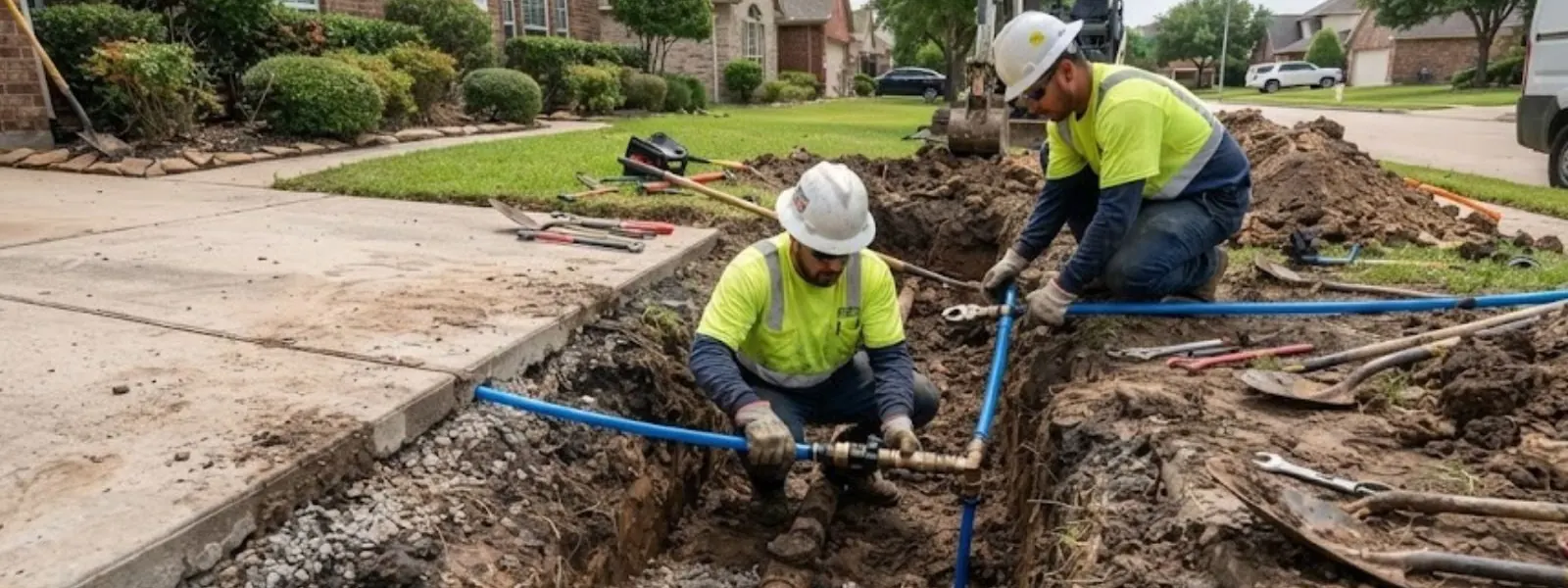
The pipe that brings city water from the street into your house is called the service line. It usually runs underground to a point near your water meter, and unless you have a reason to dig, you have probably never seen it. Whether it is copper, plastic, galvanized steel or something older is not something you can tell from the kitchen sink.
For homeowners in Elmwood Park, IL, the question now has a formal answer to go with it. The Village is surveying service line materials under Illinois law. This guide explains how to look at your pipe, what the results can and cannot tell you, and what to do next.
Why a buried pipe became a public project
Illinois passed the Lead Service Line Replacement and Notification Act, which requires water suppliers to inventory their service lines and plan replacement of lead ones. Lead was used for service lines in many American cities in the past because it is soft and easy to bend and join.
Elmwood Park is part of that effort. The Village is gathering information on pipe materials through a Water Service Material Inventory, and it wants input from owners and tenants alike. Your answers help fill gaps, since the stretch of line on your property is often the part officials know least about.
Checking the pipe at your meter, step by step
Find where the line enters
Look in the basement or utility area for the meter and the pipe leading to it from the outside wall. The material of the pipe just before the meter is the clue most useful to the inventory.
Look at color and shape
Lead tends to be dull gray, soft looking and often thicker at joints where it was wiped with solder. Copper is brownish orange. Galvanized steel is gray and threaded. Plastic is usually black, blue or white.
Try the scratch test
Gently scratch a small spot with a coin or key. Lead is soft and shows a shiny silver mark. Do not sand, file or cut, and wash your hands afterward. Scratching lightly keeps dust from being created.
Try a magnet
Hold a magnet to the pipe. A magnet sticks to galvanized steel but does not stick to lead or copper. Note what you see and take a photo of the pipe and the meter.
Report what you found
Share your observations with the Village through its inventory process. If you cannot tell, say so. A plumber can confirm the material in person.
What your observations may point to
The test is rough. It cannot prove anything, and the pipe may change materials between the street and the house. Use the table to describe what you saw, and let the Village or a plumber confirm.
| Color and feel | Scratch | Magnet | General reading |
|---|---|---|---|
| Dull gray, soft looking | Shiny silver streak | Does not stick | Could be lead, so report it to the Village |
| Gray, threaded, rigid | Hard to scratch | Sticks | Likely galvanized steel, not lead, but old |
| Brownish orange | Copper tone shows | Does not stick | Likely copper |
| Black, blue or white | Plastic surface | Does not stick | Likely plastic |
| Painted, coated or hidden | Cannot tell | Cannot tell | Ask a plumber to verify the material |
Want a plumber to look at the pipe?
Our licensed plumbers can identify the material at your meter and explain your options before any work starts.
What Illinois law means if the pipe is lead
State law generally bars partial lead service line replacement, meaning replacing only the owner's side or only the street side. The reasoning is that disturbing a lead line can shake loose particles and leave an uneven joint. In general, a replacement is meant to cover the full line from the water main to the meter.
That is why it matters not to start your own digging. A full replacement is coordinated with the Village, since part of the line lies in the public way. Our water line repair service handles the owner's side of a line and works with the Village where a project involves it.
If your whole house has aging pipe as well, the interior plumbing may need attention at the same time. A repiping plan can be coordinated with a service line project so the walls and the street are not opened twice.
Flushing the tap is not a fix
Running the tap clears stagnant water from your home, but it does not change the pipe. It is not a substitute for finding out what the line is made of. For health questions about your household, ask the Village and your doctor, and do not rely on guesses from a website.
Questions to ask before anyone digs
Ask who is responsible for each section of the line and who coordinates with the Village. Ask whether the work covers the full line from main to meter. Ask for the plan in writing, including how the yard, sidewalk or driveway will be restored.
Digging in Illinois requires a call to 811 at least 3 days and no more than 10 before work starts, and the locate is at no charge. Utilities do not mark private lines, so the plumber has to locate the line on your property. Look up any plumber you hire on the state licence verification page before they begin.
Not sure what you saw?
Describe the pipe to our plumbers or have us look in person. We will tell you what we see and what to report.
Elmwood Park's service line survey and what it asks of you
Elmwood Park buys Lake Michigan water from the City of Chicago, meters it, stores it in an underground tank and a water tower, and pumps it to homes. It treats and chlorinates the water before delivery and publishes an annual water quality report on its Public Works and Water page. Read it, and test your tap if you want more detail about your own water.
The Village says it has begun steps to remove lead water services in the coming years, and the Village inventory is available on request. We do not know how many lines are affected, and we cannot tell you whether any given house has one. Only the Village inventory and a look at the pipe can answer that.
Home age alone does not settle the question. The median home here was built in 1955, and many are 50 to 90 years old, so older materials are often found, but that is only a hint. Answer the Village survey whether you own or rent, since tenants are asked too.
We serve homes across the Village and neighbors in River Grove, who should ask their own village about its inventory. The service area page shows where we work.
Sources: Village of Elmwood Park lead service line page and water quality report, Illinois EPA, IDPH lead service line page, CMAP community data
Service line questions from Elmwood Park households
No. Fixtures, indoor pipes and the water itself do not reveal the material of the buried line. The most useful clue is the pipe where it enters your home near the meter, and even that should be confirmed by the Village or a plumber.
A light scratch on a small spot is the standard check, and it should not create dust. Do not sand, file, cut or scrub it, and wash your hands afterward. If you are uneasy, skip it and ask a plumber to check.
Yes. Under the Illinois Lead Service Line Replacement and Notification Act, the Village is collecting data on service line materials through a survey sent to residents. You can ask the Village for a copy of its inventory.
In general, Illinois law bars partial replacement, so a full-line plan is needed and the Village must be part of it. Ask the Village before hiring anyone, and ask any plumber how they will coordinate the public and private sections.
No. Flushing may clear water that sat in the pipes, but it does not remove the pipe. For any health question, ask the Village and your doctor, and find out what your line is made of.
Then it is probably galvanized steel, which is not lead but is old and can corrode from within. It can still limit pressure and flow, so a plumber may recommend replacing it. Note what you saw and report it to the Village.
Look the plumber up on the state's online licence verification tool run by the Illinois Department of Public Health. A licence number should appear in the plumber's advertising, so ask for it before booking.
Standards and sources: Work in Illinois follows the Illinois Plumbing Code (77 Ill. Adm. Code 890), and the Village of Elmwood Park building department applies those minimum standards locally. Digging guidelines come from JULIE (811): call at least 3 days and not more than 10 days before a dig, and note that private lines are not marked by utilities.